
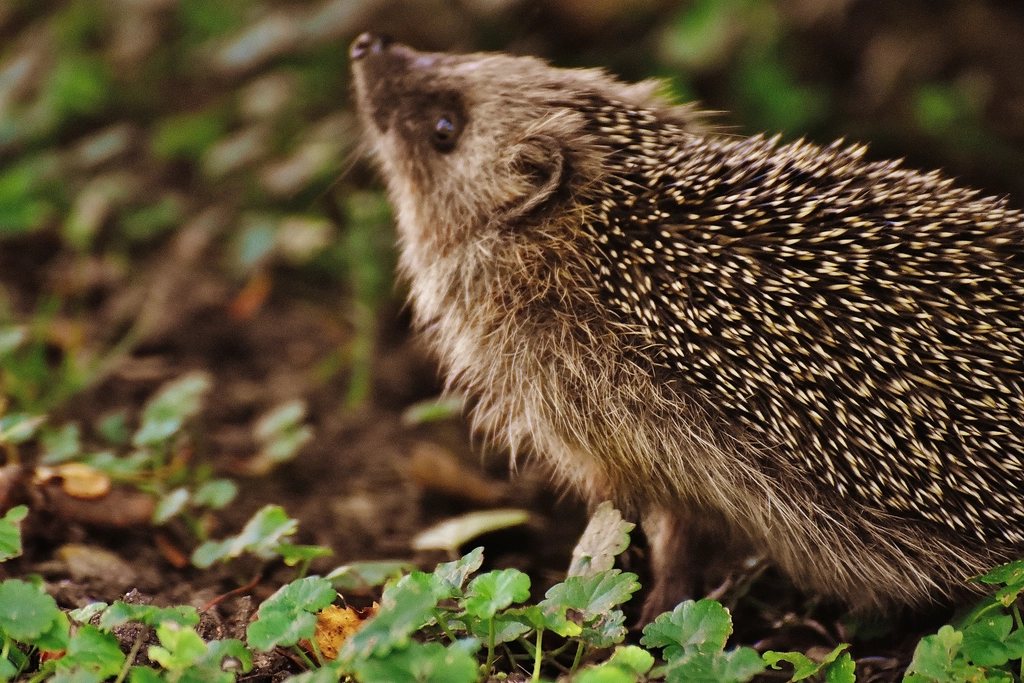
A two-year-old sees a beetle and reaches for it. A ten-year-old sees a beetle and, depending on what has happened in the eight years between, either crouches to watch it or shrieks and stamps on it. The reaction is learned, and most of the learning comes from us. The way adults respond to a wasp at a picnic, a slug on the path or a spider in the tent shapes, more than any lesson, whether a child grows up curious about other living things or frightened of them. We think getting this right is one of the quiet responsibilities of outdoor childhood, and it is easier than it looks.
Curiosity comes first, fear is taught
Very young children are not afraid of most animals. Fear of snakes and spiders appears to be partly innate in humans, in the sense that infants pay attention to them faster than to flowers or frogs, but attention is not the same as fear. The fear itself is largely acquired by watching adults. Studies of toddlers show that a parent’s facial expression towards an unfamiliar object is enough to determine whether the child approaches it or backs away, and the effect persists.
This gives us a clear starting point. If we want children to care about wildlife, the first job is to manage our own reactions. That does not mean pretending to love wasps. It means a calm voice, a still body and a sentence that describes rather than alarms: “There is a wasp on the jam, let us move the jam.” Children copy the tone more than the words.
The two-finger rule and other simple habits
Small, consistent habits do most of the work of teaching care. In our own practice a handful of them cover almost every situation a child under twelve will meet, and they are simple enough that a three-year-old can follow them.
- Look first, for a long time. Most animals are more interesting to watch than to hold, and watching costs the animal nothing.
- Two fingers, gently, or not at all. Insects, snails and worms can be touched with two fingers if the animal is not trying to leave; anything that moves away is asking to be left.
- Put it back where you found it. A woodlouse belongs under its log, a crab under its rock. The place is part of the animal.
- Never pick up a baby. Fledglings on the ground are usually being fed by parents nearby; fawns are usually waiting for a mother who will return. Leave them.
- Do not feed wild animals from the hand. It teaches them to approach people, which ends badly for the animal more often than for the person.
The two-finger rule deserves a note. It works because it replaces a blanket “do not touch”, which children experience as a prohibition on curiosity, with a technique. A child who has been shown how to touch a snail properly, and has felt it retreat and then re-emerge, has learned something about the animal’s point of view that no amount of “be careful” would convey.
Handling the genuinely risky animals
There are animals a child should not touch, and the list is short enough to teach directly. Amphibians have permeable skin that absorbs sunscreen, insect repellent and salt from human hands, so frogs, toads and newts are best watched in the pond and, if handled at all, held with wet hands for a few seconds only. Bats should never be handled, since a small number carry a virus that is dangerous to people; a grounded bat is a job for an adult with gloves. Ticks, which are tiny relatives of spiders found in long grass and bracken, are the most important risk in many temperate regions because they can transmit a bacterial infection. The habit here is a full-body check after any walk through grassland or woodland edge, and prompt removal with fine tweezers; the infection risk rises sharply only after the tick has been attached for more than a day.
Stinging insects deserve calm rather than panic. Wasps sting when trapped or swatted, so the useful instruction is to stay still and let it leave. Nettles hurt and then stop hurting, and a child who has been stung once and lived learns that most discomfort outdoors is brief. Snakes vary by region: in Britain the only venomous species is the adder, whose bite is painful but very rarely serious; in most of Europe and North America a snake seen on a path will be gone before anyone reaches it. The rule that covers all of them is the same one that covers everything else: give it room and watch it go.
From noticing to caring
Care follows knowledge. A child who can name three birds in the garden notices when one of them is missing. A child who has watched a caterpillar for a fortnight and seen the chrysalis split will not casually crush the next one. So the second job, after managing fear, is to build familiarity: the same pond visited every month, the same tree watched through four seasons, the same patch of hedge checked for the first bumblebee of spring.
Recording helps. A simple nature notebook, with a date, a drawing and a sentence, turns a passing sighting into something the child owns. Counting is even better. Many countries run annual garden bird counts, butterfly counts or amphibian surveys that welcome children’s records, and the experience of contributing a real number to a real dataset is one of the surest ways we know to turn a child into someone who thinks of wildlife as worth protecting.
Keeping pets and wildlife apart
A short but important point concerns dogs. Ground-nesting birds in spring and early summer, from skylarks on grassland to plovers on beaches, lose eggs and chicks to loose dogs every year, and deer and sheep are injured by chasing. Children who love both their dog and the birds can be taught the seasons when the lead stays on, and why. The lesson generalises: caring for wildlife often means restraining something we love rather than doing something new.
What we are really teaching
None of this is about producing junior naturalists, though some children will become that. It is about a stance towards the living world: interested, unafraid, gentle by habit. Children who hold that stance at ten tend to hold it at forty, and a generation that holds it makes different decisions about land, pesticides and what to do with the wet corner of the garden.
The animal itself is often the best teacher. Our part is to stay calm, provide the log to lift and the pond to visit, and resist the urge to say “careful” when “look” would do.