
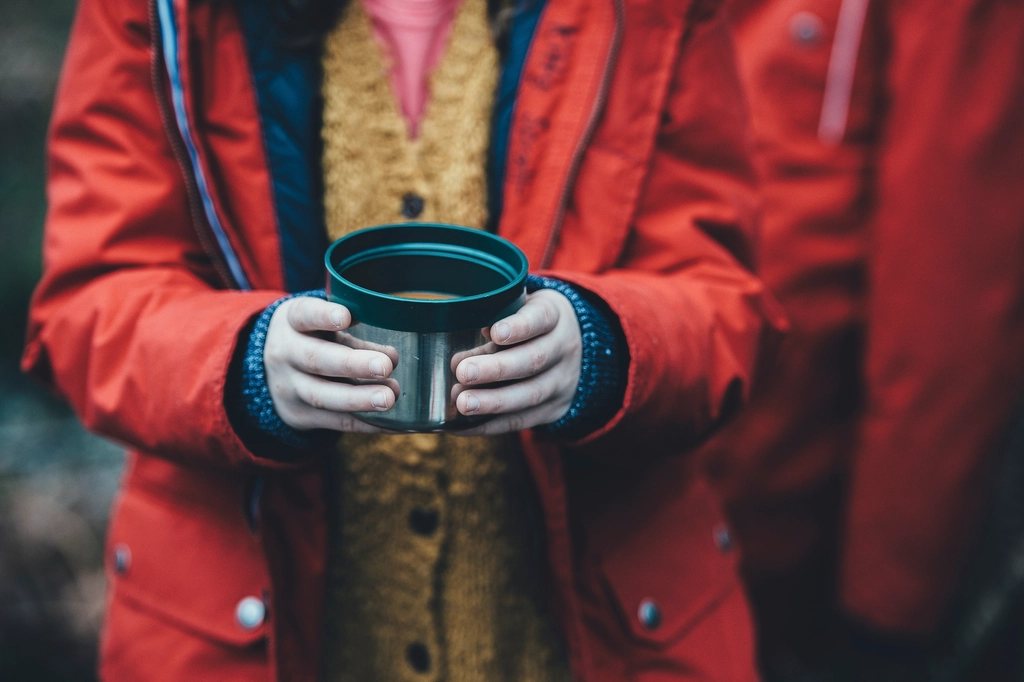
There is a saying, borrowed from the Scandinavian countries where the forest kindergarten was born, that there is no such thing as bad weather, only bad clothing. It is mostly true, and it is repeated so often that it can sound glib. Rain is not the same as sunshine. It makes ground slippery, hands cold and tempers short, and a session that ignores those facts will not be a good one. But a session that works with them can be among the best of the year, because rain changes the wood into a different place and children notice. Streams appear, worms surface, the light goes soft and the mud kitchen has water on tap. This is how we make it work.
The go or no-go decision, made the night before
Rain on its own is almost never a reason to cancel. What we watch for are the things that come with it. Wind is the real concern in a wood: above about forty kilometres an hour, roughly force six on the Beaufort scale, dead branches start to come down and we move the session out from under the canopy or call it off. Thunder is a straightforward no; we do not stay under trees in a storm, and if it arrives mid-session we leave the wood for the nearest building and wait thirty minutes after the last rumble before returning. Heavy rain after a dry spell can also flood a site that is normally fine, so we check the stream levels on arrival.
We decide by about eight in the evening, tell families by message, and hold to it. A group that cancels every time the forecast looks damp teaches children that rain is a reason to stay in, which is the opposite of what we are for.
Clothing: three layers and nothing cotton
Most misery in the rain is caused by one of two things: a child who is wet through, or a child who is dry but cold. The layering system handles both. Next to the skin, a thin layer of wool or synthetic that keeps insulating when damp. Over that, a warm middle layer, fleece or wool, thicker in winter. On the outside, a waterproof shell, and for young children that means an all-in-one suit or a jacket plus dungaree-style trousers that come up over the chest, because ordinary waterproof trousers gap at the waist within ten minutes of puddle jumping.
The rule we repeat to families is no cotton. A cotton T-shirt under a waterproof becomes a wet, cold sheet against the skin and stays that way all morning. Jeans are worse. On the feet, wellies with a wool sock or a fleece liner, and a spare pair of socks in the bag. Hands are the weak point in cold rain: waterproof mittens over thin liner gloves keep most children going, and a spare dry pair in a sealed bag rescues the rest.
We keep a box of spare kit at the site, mostly outgrown hand-me-downs, because someone always arrives in a hoodie.
Rigging the tarp: the shelter that makes everything else possible
A tarp is the difference between a session in the rain and a session sheltering from it. We rig a large one, at least three by three metres and preferably four by four, over the gathering circle before the children arrive. The simplest reliable pitch is a ridgeline: a rope tied taut between two trees at about head height, the tarp thrown over it and its corners pegged or tied out to shrubs and stakes, pulled down at an angle on both sides so that water runs off rather than pooling.
Two things make the difference between a good tarp and a bad one. The first is tension: a sagging tarp collects a bath of water that dumps on whoever brushes the underside. The second is orientation: the low edge faces the wind, so that rain is not driven in under the shelter. Older children learn to rig this themselves over a few sessions, and once they can, a group of ten-year-olds will put up a second tarp over the mud kitchen without being asked.
Under the tarp we keep the seating logs, the snack, the story and the first-aid kit. On a wet morning most children spend more time out in the rain than under the shelter, but they need to know it is there.
What to actually do in the rain
The activities that work best in rain are the ones that use it. Water play comes first: channels and dams in the streams that appear on the path, gutters made from split bamboo or halved plastic pipe, cups and funnels in the mud kitchen. Worms and slugs come to the surface and a mini-beast hunt in the rain finds things a dry one does not.
Fire in the rain is possible and, honestly, one of the most satisfying things to teach. The trick is dry tinder carried from home in a sealed tin, birch bark which burns wet, and standing dead wood split to reach the dry centre. A small fire under the edge of the tarp, with the tarp raised well above it and its smoke drifting away from the shelter, keeps hands warm and hot chocolate flowing. It also shows children that skill beats conditions.
What we avoid is anything that needs still hands for a long time. Whittling and detailed craft go badly with cold wet fingers; we save them for dry days.
Watching for cold, and knowing when to stop
Children lose heat faster than adults, and young children often do not say they are cold; they go quiet, stop playing, or become suddenly tearful over nothing. Those are the early signs of a body getting cold, and they come before shivering. Every adult in the session watches for them. The response is quick: a dry layer, a hot drink, a job by the fire, and if that does not work within ten minutes, a walk back to the cars with a warm adult.
Blue lips, slurred words, clumsiness or a child who has stopped shivering despite being cold are serious signs and end the session for that child at once. They are rare when the clothing is right, and the point of everything above is that the clothing is right.
A wet session is also usually a shorter one, and we do not fight that. Two hours in steady rain is plenty for children under six. Ending early, warm and happy, is a good session. Ending late, wet and crying, teaches everyone the wrong lesson. Read the group, not the clock.
Why it is worth it
The families who stick with a forest school through a wet winter are the ones whose children stop seeing weather as a problem. That is not a small thing. A child who has been warm and busy in the rain a dozen times has a relationship with the outdoors that a fair-weather child does not, and it lasts. The mud comes off. The memory of damming a stream in a downpour with your friends does not.