
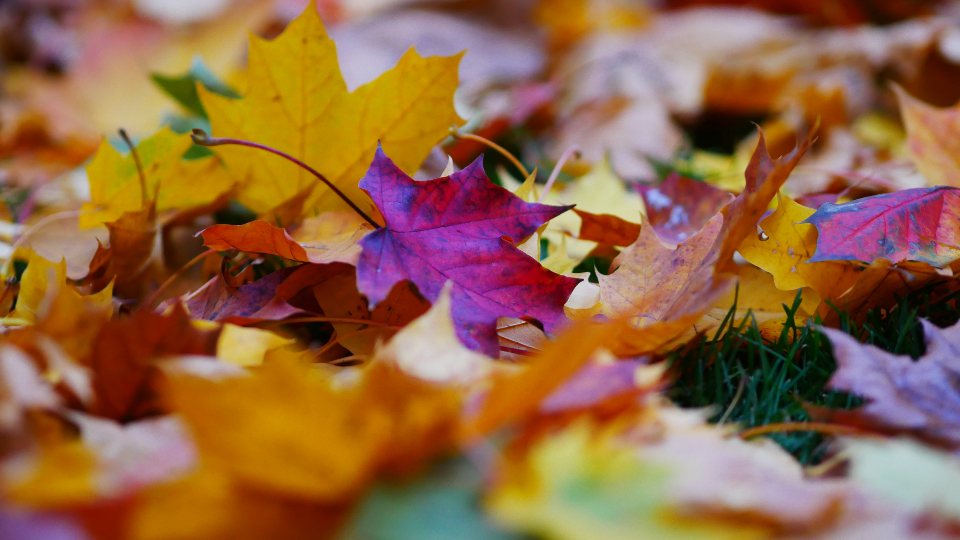
Some of the best art our children have ever made lasted less than an hour. A spiral of leaves graded from green through yellow to red, laid on a path and gone by the afternoon. A tower of balanced stones on a river bank that stood until the next high water. A mandala of petals, seed heads and snail shells arranged on a tree stump and then, quite deliberately, blown away by its maker. Ephemeral art, made from what a place offers and left for the place to take back, is one of the most accessible creative activities we know. It costs nothing, needs no cleaning up, and it teaches children to look.
Why art that disappears is worth making
Adults often find the temporariness troubling. Children rarely do, if it is framed honestly from the start. Making something without the pressure to keep it, display it or have it judged frees children to experiment. A stone that will not balance is not a failure; it is information. A pattern that the wind rearranges becomes a collaboration with the weather.
The activity also trains attention in a way that few others match. To make a gradient of leaves, a child must notice that leaves come in a hundred shades. To build a stone tower, she must feel the weight and shape of each stone and read the flat spots. Ephemeral art is a form of close observation dressed up as play, and it works on children who would never sit still for a nature identification walk.
Gathering with care
The materials are whatever is already loose on the ground: fallen leaves, twigs, seed cases, pebbles, feathers, shells, petals dropped by the wind. We use a simple rule with young children: if it is on the ground, it is fair; if it is still attached, leave it. This protects living plants and also encourages children to search rather than grab. In late autumn a small woodland path can yield a dozen colours of leaf within a few metres.
A few materials need extra thought. Bird feathers are fine to handle but should be left in place in areas where avian disease is a concern; wash hands afterwards either way. Stones from a beach or river can be moved for the day but should be returned, especially in places where stacked cairns confuse walkers or where stone-turning disturbs the creatures underneath. Fungi are best admired and left alone.
Six starting points that always work
Children rarely need much prompting once they have seen an example, but a few reliable structures help a first session get going.
- The colour line: leaves or petals laid in a strip that shifts gradually from one colour to another. Works from about age three.
- The spiral: a curve of any single material, which teaches children to think about the whole shape rather than the individual piece.
- The frame: four sticks laid in a square, with a “picture” composed inside. The frame gives a boundary, which helps younger children finish.
- The stone tower: balanced rocks, largest at the base, which becomes a patience exercise for older children.
- The mandala: a circular pattern built outwards from a central object, often on a stump or a flat rock, alternating materials in rings.
- The nature face: eyes, nose, mouth and hair made from found objects on the ground or pressed into a clay or mud base on a tree trunk.
Most sessions begin with one of these and then drift somewhere we did not plan, which is exactly as it should be. A five-year-old who starts a colour line and ends up making a “bird nest” out of it has still done the looking, sorting and arranging that we were hoping for.
Working with the seasons
The palette changes through the year and children notice. Spring offers blossom, catkins and the small bright greens of new leaves; it is a good time for petal mandalas on dark soil. Summer is the season of grasses, seed heads and long stems that can be woven, plaited and tied into shapes. Autumn is the obvious season, with the widest colour range and the greatest abundance underfoot; a single oak, beech and maple wood can provide most of the spectrum in a week. Winter, often overlooked, gives ice, frost, bare twigs and the strong contrast of snow, and it makes possible the most magical of all ephemeral works: coloured water frozen in shallow trays overnight and hung as sun-catchers, or patterns of leaves frozen into ice discs.
Shadow is a material too. On a sunny day, arrangements on a flat stone or a patch of pale sand change as the sun moves, and older children enjoy planning a piece to be seen at a particular time of day.
Recording without keeping
Photographs solve the problem of loss for children who need it solved. A shot of the finished piece from directly above, taken by the child herself, is often more meaningful than any framed drawing. Some families keep a nature art album on the wall or in a folder; some forest school groups begin the next session by looking at what has changed at the site of last week’s work. Watching your leaf spiral slowly fade, scatter and rot is a lesson about decay and return that no worksheet can teach.
It also helps to talk about the piece before it goes. What did you make? What was hard? What will happen to it tonight? A two-minute conversation at the end of a session locks in more than the making does.
What adults should and should not do
The role of the adult is to gather alongside, to model looking, and to not improve the work. It is very hard to watch a child place a red leaf next to a red leaf and not say “what about the yellow one there?”, but the suggestion nearly always takes the piece away from the child. Make your own piece nearby instead; children copy what they admire and ignore what they are told.
Keep the sessions short for the youngest, twenty minutes is plenty at three, and let older children run for as long as they want. Wash hands, return anything borrowed, and leave the site as you found it, except perhaps for a spiral of leaves that will be gone by morning.