
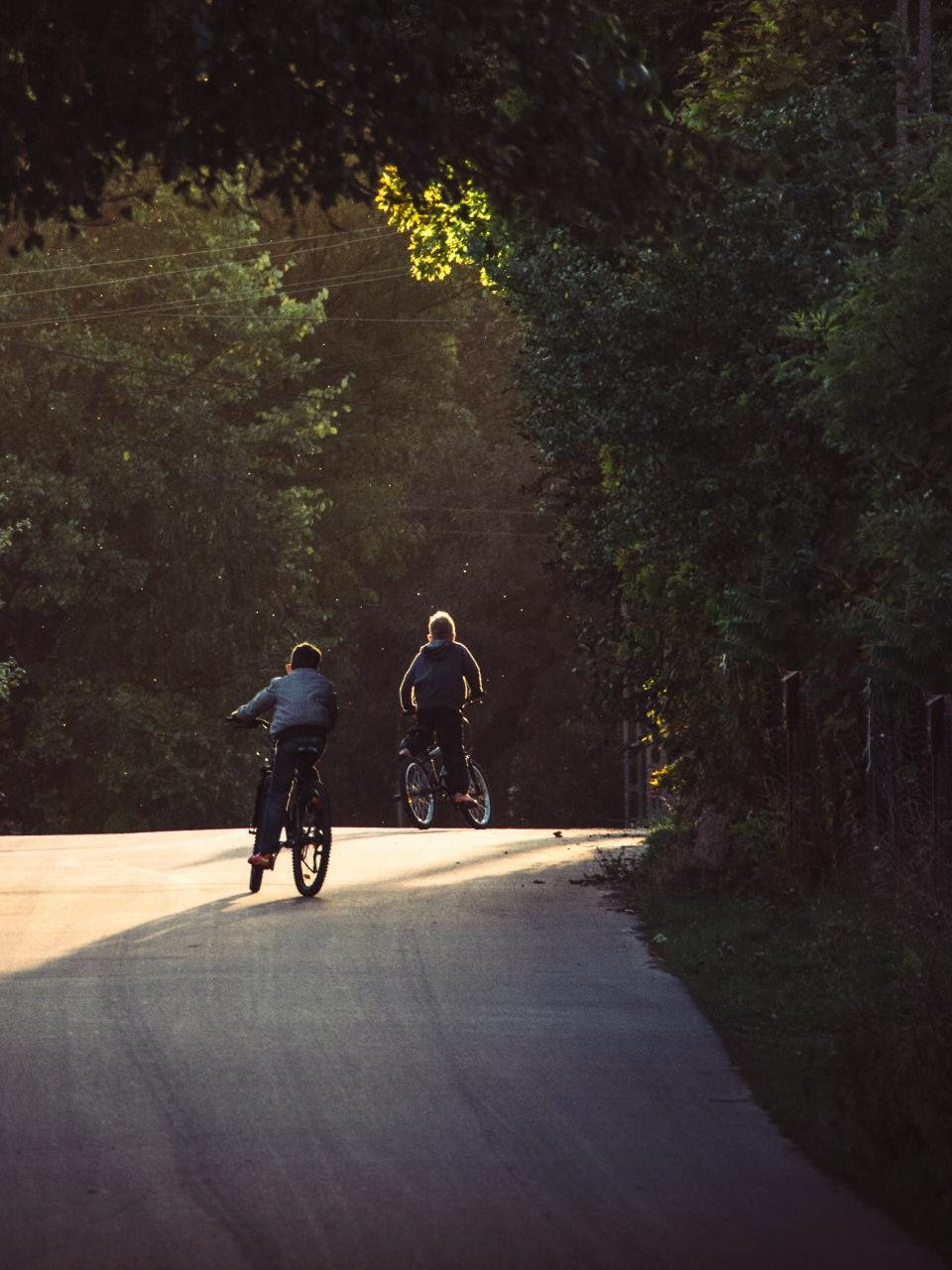
Ask a group of parents to describe a good childhood and you will hear two pictures. In one, children roam the neighbourhood after school, build dens, invent games and come home at dusk. In the other, they learn the violin, train with a swimming club and play in a league on Saturday mornings. Both pictures are attractive. The difficulty is that they compete for the same hours, and over the past half century the second has been steadily winning. We think it is worth asking what each kind of time actually gives a child, because the answer is not that one is good and the other bad.
How the balance shifted
Historians of childhood generally date the decline of free play in Western countries to the decades after the 1950s. Time-use surveys in the United States found that between 1981 and 1997 alone, children’s free play time fell by around a quarter, while time spent in organised sports and lessons roughly doubled. Similar patterns appear in British and Canadian data. The reasons are familiar: more traffic, more working parents, smaller families, a rising sense that unsupervised children are at risk, and the belief that a well-spent childhood is a scheduled one.
The result is that many children aged six to twelve now have every weekday afternoon assigned. School, then club, then homework, then bed. Unstructured time, the kind with no adult goal attached, has become the exception rather than the rule. This is a genuine historical change, and it is worth being clear-eyed about what has been lost and what has been gained.
What organised activity does well
We should start with the case for the club and the coach, because it is a real one. Organised activities teach specific skills that free play rarely produces on its own. Few children learn to swim properly by splashing about; almost none learn an instrument, a martial art or a team sport to any standard without instruction. Coaching provides progression, feedback and the experience of getting measurably better at something hard, which is itself a lesson in persistence.
Organised activity also provides structure that some children thrive on, and it widens social circles beyond the school year group. Team sports in particular teach cooperation towards a shared goal, handling a referee’s decision, and losing without falling apart. For families without safe outdoor space nearby, a club may be the only reliable way a child gets vigorous exercise at all.
What free play does that nothing else can
The case for free play rests on a different set of outcomes, and they are harder to see because nobody hands out a certificate for them. When children play without adult direction, they must decide what to do, negotiate the rules with each other, resolve disputes, and change the plan when it stops working. Every one of those steps is an exercise in what psychologists call executive function: planning, self-control, flexible thinking and the ability to hold a goal in mind.
A study of six and seven year olds published in 2014 by researchers in Colorado measured how children spent their time out of school and then tested their self-directed executive function, the ability to set and pursue their own goals without being told. Children who spent more time in less structured activities scored higher; those with heavily scheduled weeks scored lower. The correlation held after allowing for family income and the children’s vocabulary. The authors were cautious about cause, but the finding fits what the theory predicts: a child who is always told what to do next gets little practice at deciding.
Free play, especially outdoors, is also where children meet manageable risk. Climbing a tree, damming a stream or jumping between rocks involves judging what is safe and discovering, by small failures, where the limits lie. Organised sport manages risk on the child’s behalf; free play makes the child the manager. That experience, repeated over years, is where much of the resilience we hope for actually comes from.
The right to play
It is worth remembering that play is not merely a nice extra. Article 31 of the United Nations Convention on the Rights of the Child, adopted in 1989 and ratified by nearly every country in the world, recognises the right of every child to rest, leisure and play. The American Academy of Pediatrics issued a clinical report in 2018 titled The Power of Play, which went as far as encouraging doctors to prescribe play at well-child visits, on the grounds that it supports brain development, reduces stress and builds the social skills that structured lessons cannot. When paediatricians start writing prescriptions for something, it is a sign that the thing has become scarce.
Signs the balance has gone wrong
Every family is different and there is no correct number of clubs. But there are some patterns that suggest the schedule has crowded out something important, and we have learned to watch for them.
- A child who says they are bored within five minutes of unstructured time, and cannot think of anything to do without a screen or an adult.
- Weekends that are more tightly timetabled than weekdays, with no afternoon left empty.
- A child who no longer plays with neighbours or siblings because everyone is somewhere else.
- Activities the child has stopped enjoying but continues because the term is paid for.
- Tiredness, irritability or tears on the way to an activity rather than after it.
The first sign is the most telling. Boredom tolerance is a skill, and children who have never had to fill an empty hour find it genuinely distressing at first. The distress passes, usually within a few days of regular unscheduled time, and what follows is the invention of games. We have watched this happen often enough to trust the process.
A workable balance
Our own rule of thumb is that organised activities should occupy no more than half of a child’s free afternoons, and that at least one weekend day should have nothing planned at all. Within that, we lean towards activities the child chose and away from ones chosen for them. And we try to make sure that the unstructured time happens somewhere with material to work with: a garden, a park, a wood, a beach. An empty afternoon in a tidy living room is not free play; it is a waiting room.
Both pictures of childhood are worth having. The coach teaches the backstroke and the den teaches the child to decide. The mistake of the past fifty years has been to assume that only the first of these counts.