
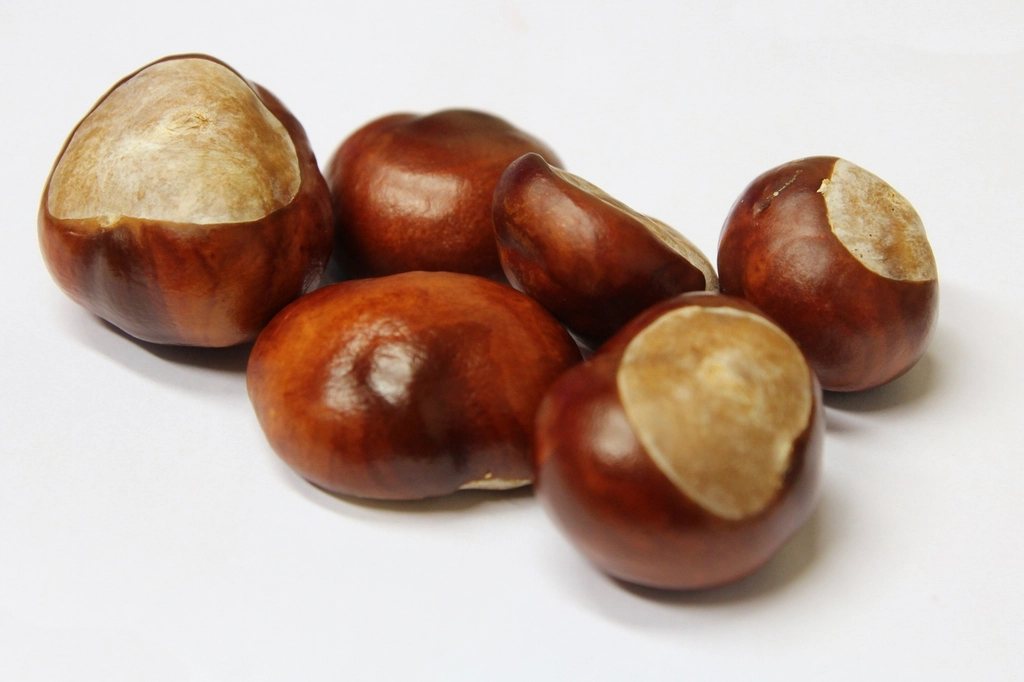
If we had to pick one season to convince a sceptical parent that the outdoors is worth the mud, it would be autumn. Everything the woods have been building all year is suddenly available at ground level: leaves in colours children cannot believe are natural, seeds designed to fly, roll and explode, shiny conkers that feel like treasure, and fungi that look like they have come from another planet. The weather is mild, the light is low and golden, and the pace of change is fast enough to hold attention from one week to the next. This guide covers the four great autumn materials and how to use them with children from two to twelve.
Leaves: what the colours are telling us
The science of autumn colour is simple enough for a six year old and interesting enough for an adult. Leaves are green all summer because of chlorophyll, the pigment that captures sunlight. As days shorten and nights cool, the tree stops making chlorophyll and breaks down what is left, and the yellow and orange pigments that were there all along, hidden under the green, are revealed. The reds and purples are different: many trees make those pigments fresh in autumn, and cold, bright weather produces the strongest reds. A dull, wet autumn gives dull colours; a crisp one after a good summer is spectacular. Children who know this start looking at the weather as a predictor and get genuinely excited about a frost.
Leaf play needs no instructions. A pile raked into a heap is jumped in, thrown, buried in and rebuilt for as long as the pile lasts. Beyond that, sorting leaves by colour, by shape and by tree is a real botanical skill that children pick up faster than adults. Oak, beech, sycamore, maple, birch, horse chestnut and ash are enough to start. Rubbings with the paper side of a crayon reveal the veins. Leaves pressed between newspaper under a stack of books are dry in a fortnight and last all winter. A leaf boat on a stream, with a twig mast, is the best five minutes of any walk.
Seeds: engineered to travel
Autumn is the season of seed dispersal, and every mechanism is a toy. Sycamore and maple seeds spin as they fall, slowing their descent so the wind carries them further; drop them from a climbing frame and children will spend half an hour testing which spins longest. Dandelion and thistle seeds float on parachutes. Burdock and cleavers hook onto socks and dog fur, which is why a walk through a field edge in October ends with a picking off session and a lesson in how some plants hitch a ride. Gorse and broom pods dry, twist and crack open, firing seeds a metre or more on a warm day, and a child who hears the pop and finds the cause has learned something they will not forget. Acorns, hazelnuts and beech mast are carried and buried by jays and squirrels, and the forgotten ones become the next generation of trees.
A seed hunt with a paper bag and the simple challenge of finding one seed that flies, one that floats, one that hooks and one that is eaten is a complete lesson in evolution disguised as a treasure hunt. Planting a few acorns in pots in October and watching them break through in spring closes the loop.
Conkers: the small ritual that endures
Horse chestnut seeds, conkers, ripen and fall from late September through October, splitting out of their green spiky cases and lying on the path in a gloss that fades within a day. The hunt for them is a ritual that has survived for generations, and the pockets full of conkers that come home are proof that children still value things that cost nothing. For young children, conkers are for collecting, counting, sorting by size, and floating in a bucket to see that they sink. For older ones, the game itself, threaded on a string and swung at an opponent’s conker, is worth the odd bruised knuckle. We keep an eye on toddlers, who will put anything shiny in their mouths, and conkers are mildly toxic if eaten.
Fungi: look, wonder, do not eat
Autumn fungi are the most alien things a child will encounter in a European or North American wood, and we make a point of not skipping them out of nervousness. The mushrooms we see are only the fruiting bodies of a much larger organism, a web of threads called mycelium that runs through the soil and dead wood and can spread over a whole woodland floor. Fungi are the recyclers of the forest: without them fallen trees would pile up unbroken. A rotting log turned over gently reveals the white threads, and a bracket fungus on a dead trunk shows children that the log is being eaten.
The rule we use with fungi is clear and calm. We look, we photograph, we can touch most of them with our fingers and then wash our hands, and we never eat anything found in the wild. Touching is not the danger; poisoning comes from eating, and some of the most dangerous species look plain and harmless. The fly agaric, with its red cap and white spots, is the one children recognise from storybooks, and it is worth pointing out precisely because it teaches that beautiful and poisonous can be the same thing. We do not pick fungi for collections, partly out of respect for the organism and partly to avoid the temptation of a pocketful arriving in a kitchen. For a fungi walk we bring a hand mirror to see under caps without kneeling in the mud, and a small spray bottle to make gills stand out.
An autumn walk that covers everything
- Set off mid morning when the dew has dried but the light is still low and golden.
- Give each child a paper bag for seeds and leaves and a firm rule about fungi staying in the ground.
- Stop at the first big broadleaf tree and sort leaves by colour and shape.
- Find a climbing frame or a bank for the sycamore seed drop test.
- Turn over one rotting log for mycelium and beetles, then put it back exactly as found.
- Finish with a leaf pile, a conker count and a look under one mushroom cap with the mirror.
Autumn does not last. The colours peak for perhaps two weeks in any one wood, the conkers are gone by early November, and the first hard frost flattens most of the fungi overnight. That brevity is part of the lesson. Children who go out every week through October and November watch a whole world pack itself away for winter, and they learn to look now, because next week will be different.