
There are few moments in an outdoor childhood as electric as the first time a net comes out of a pond with something wriggling in it. A dragonfly nymph, a water boatman rowing on its back, a leech looping across the tray. Pond dipping and mini-beast hunting turn abstract ideas about “wildlife” into small living things a child can see, name and, briefly, hold. Done well, these activities also teach the first and most important lesson of natural history: the creature matters more than the collector. Here is how we run them so that the animals go back unharmed and the children come away wanting to look again.
What children learn from small creatures
Invertebrates are everywhere, which makes them the perfect first wildlife. A square metre of leaf litter in a temperate wood can hold hundreds of animals from dozens of species; a healthy garden pond supports a food web that a child can trace with her own eyes, from algae to tadpole to diving beetle. Children who hunt mini-beasts learn to look under things, to move slowly, to notice habitat, and to accept that some creatures bite or sting and are still worth respecting.
They also learn classification in the most natural way. How many legs? Six means insect, eight means spider, more than that means woodlouse, centipede or millipede, none means worm or slug. This sorting is real biology, and it sticks because the child did it with a beetle in her hand.
Kit that costs almost nothing
For a mini-beast hunt: a few white trays or the lids of ice cream tubs, some clear pots with lids, a magnifying glass or two, a soft paintbrush for coaxing animals off bark, and a trowel. For pond dipping: a fine-mesh net on a pole, a white washing-up bowl or tray, a few clear pots, and a simple identification sheet with pictures rather than words. A pipette or a plastic spoon helps move small animals without squeezing them. Everything else is optional.
Running a mini-beast hunt
Start by explaining where the animals live: under logs, stones and loose bark, in leaf litter, in long grass, on the underside of leaves and in the crevices of old walls. Then set the rules, which are short enough for a three-year-old to repeat back. We lift things gently and put them back the way we found them. We use a brush or a leaf to move an animal, not our fingers, unless it is a woodlouse or a snail. We keep animals in the shade and put them back within ten minutes, exactly where they came from.
The “put it back where it came from” rule is the one that matters most. A log is a whole ecosystem with its own moisture and temperature, and a woodlouse released twenty metres away on dry gravel will not survive. Rolling a log back is the responsibility of whoever rolled it over. Once the habit is in place, children police each other with enthusiasm.
Sweep-netting long grass, shaking a branch over an upturned umbrella, and setting a pitfall trap (a jam jar sunk to the rim in soil and checked within an hour) are good ways to extend the hunt for older children. None of these need to harm anything if the animals are released promptly.
Pond dipping, safely and gently
Water safety comes first. Choose a pond with a shallow, gently shelving edge or a purpose-built dipping platform, keep children kneeling or lying on their fronts rather than standing at the edge, and keep the adult-to-child ratio high with the youngest, one to two or one to three for preschoolers. Cover cuts with waterproof plasters and wash hands before eating, because standing water can carry organisms that upset stomachs.
The technique is simple. Half fill the tray with pond water first so that animals go straight into water when the net is emptied. Sweep the net slowly in a figure of eight through open water or along the edge of weed, lift it out and turn it inside out into the tray. Wait. Most animals freeze on capture and then begin to move within a minute or two; what looked like a tray of mud reveals itself as a small crowd.
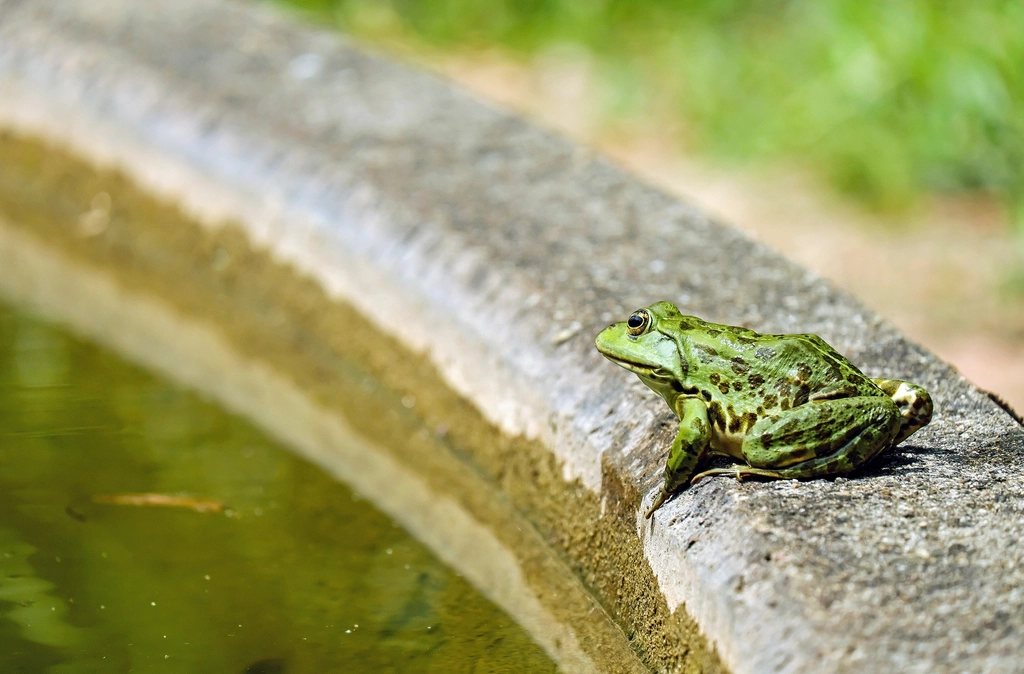
The gentleness rules for pond animals are stricter than for those on land because they are more fragile. Nets are not scraped across the bottom, which churns up silt and damages the animals living in it. Trays stay in the shade because pond water in a white tray warms very fast in sunshine. Nothing is kept for more than fifteen minutes, and everything is returned to the water at the same spot, by tipping the tray gently at the surface rather than pouring from height. Amphibians deserve particular care: tadpoles are returned first, and frogs, toads and newts are handled only with wet hands, briefly, and never by children with insect repellent or sun cream on their palms.
Common finds and what they tell you
Children like to know what they have caught, and a few creatures come up again and again.
- Water boatmen and backswimmers: the ones rowing with long back legs. Backswimmers can nip, so they are for looking at, not holding.
- Dragonfly and damselfly nymphs: fierce-looking, with a hinged jaw. Their presence usually indicates reasonably clean water.
- Mayfly and caddisfly larvae: caddis build cases of sand or plant fragments and are a classic sign of good water quality.
- Pond snails, water fleas and freshwater shrimps: the base of the food web, often present in huge numbers.
- Tadpoles, from early spring; newt larvae, recognisable by their external gills, from late spring.
- On land: woodlice, millipedes, centipedes, ground beetles, earthworms, spiders and, under stones near water, the occasional slow-moving newt in its terrestrial phase.
Biologists use the mix of species as a water quality score: many stoneflies, mayflies and caddis point to clean water, while only bloodworms and rat-tailed maggots suggest pollution. Older children can do a simplified version of this with a chart, and it turns a dipping session into real citizen science.
Timing and the seasons
Ponds are at their busiest from April to July in the northern hemisphere, when tadpoles, larvae and adult insects are all present at once. Late summer is quieter but still rewarding, and even a winter dip under thin ice produces water fleas and the occasional sluggish beetle. Mini-beast hunts work year round, with the biggest variety in late spring and early autumn, and the best winter finds under deep leaf litter and rotting logs.
Avoid dipping during the peak of amphibian breeding in early spring if the pond is small, since a net through a clump of spawn does real damage, and avoid mini-beast hunts in the same patch of a small garden more than once a week. Creatures need time to settle back, and children need time to remember that the point was never the catching.