
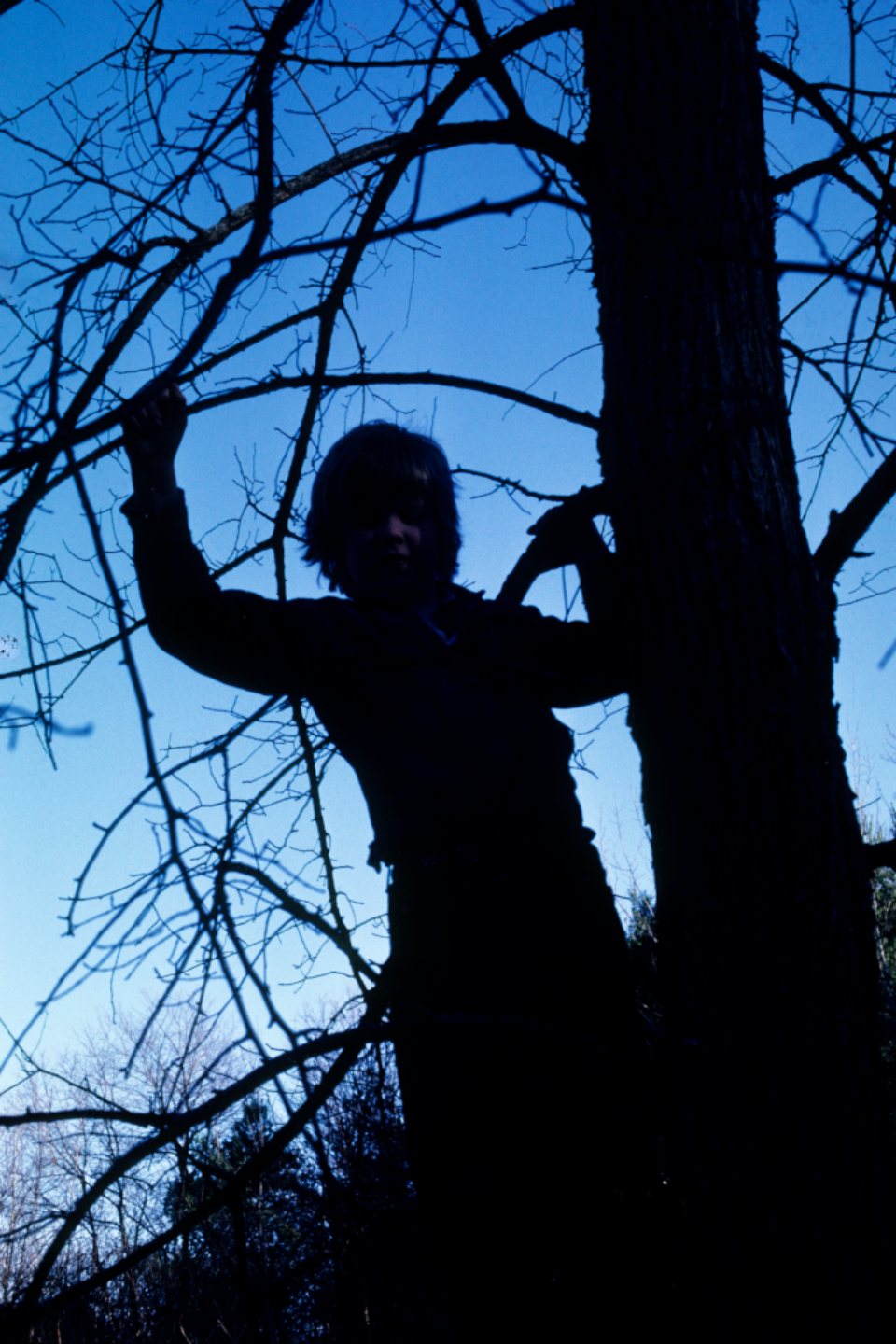
Most of us grew up with a simple idea about children and danger: less is better. Fewer sharp things, lower climbing frames, softer surfaces, more supervision. It is an understandable instinct, and in some places it has done real good. But taken to its conclusion it produces a childhood with nothing in it to be brave about, and a generation of children who have never learned what their own bodies can do. Forest school takes a different position, and it has a name: risk-benefit assessment.
The idea is not that risk is good in itself. It is that risk and benefit come as a pair, and that removing one usually removes the other. Judging an activity only by what could go wrong is half an assessment. The other half asks what would be lost if the activity did not happen at all, and that loss is often larger than the risk.
As safe as necessary, not as safe as possible
The phrase that sums up this approach is “as safe as necessary, not as safe as possible”, and it has been adopted in play-safety guidance across the UK and beyond over the past two decades. “As safe as possible” has no stopping point. You can always make something safer by making it smaller, lower, slower or forbidden, right up until there is nothing left. “As safe as necessary” asks a better question: what level of risk is acceptable here, given what the children stand to gain?
The distinction matters because children need risk in a way that is easy to forget. Balance, coordination and spatial judgement are learned by falling a little. Fear is learned to be managed by being a bit afraid and coming through it. A child who has never climbed higher than an adult can catch them has no information about heights, and will get that information later, on a bigger fall, with less supervision.
The difference between a risk and a hazard
Practitioners draw a line between two words that everyday speech runs together. A hazard is something that can cause harm which the child cannot see or judge: a rusty nail in a log, a rotten branch that looks sound, a patch of poison ivy, a hidden drop behind a bush. A risk is something the child can see, understand and choose to engage with: the log is slippery, the branch is high, the stream is fast.
The job of the adult is to remove hazards and manage risks. We walk the site before each session, look for the nail and the rotten branch, and deal with them. What we do not do is cut down the climbing tree or fence off the stream. Those are the risks, and they are why we came.
A useful test when you are unsure which you are looking at: could a six-year-old, standing in front of it, work out what might happen? If yes, it is probably a risk to be managed. If no, it is a hazard to be removed or clearly marked.
Six kinds of risky play, and what each one teaches
A Norwegian researcher studying early-years play in the mid-2000s sorted the things children are drawn to into six categories, and the list has become a standard reference. Each type carries a recognisable benefit.
- Heights: climbing trees, rocks and banks. Teaches balance, grip, planning a route and judging one’s own limits.
- Speed: running downhill, sledging, swinging, sliding. Teaches reaction time and how momentum works.
- Tools: knives, saws, hammers, fire. Teaches control, patience and respect for consequence.
- Elements: deep water, fire, ice, cliff edges. Teaches humility about forces bigger than the body.
- Rough and tumble: play fighting, wrestling, chasing. Teaches reading other people’s signals and stopping when asked.
- Getting lost: exploring out of sight, hiding, wandering. Teaches independence and the feeling of being trusted.
Notice how many of those a cautious adult would ban outright, and notice that each one maps onto a skill the child cannot get any other way. When we assess a session we are looking to make sure the children have access to most of these, in a form matched to their age.
What a written risk-benefit assessment looks like
A formal assessment is not a long document. For any activity or site feature it records four things: the benefits, the risks, the existing controls, and the judgement. Take a rope swing over a shallow dip. The benefits are physical confidence, turn-taking and the sheer joy of it. The risks are a fall from perhaps a metre onto uneven ground, a collision with a waiting child, and rope burn. The controls are a checked anchor branch, a cleared landing zone, a waiting line marked by a log, and a rule that only one child swings while the others stand behind the log. The judgement, written in a sentence, is that with those controls the benefits clearly outweigh a low chance of minor injury.
The document is dated and signed, reviewed each season, and rewritten if the site changes. Its purpose is as much to make the leader think as to satisfy an insurer. Writing “the benefits” forces you to name them, and if you cannot name any, that is worth knowing too.
Dynamic assessment: the judgement you make on the day
The written assessment describes the normal state of things. On the morning itself, the leader makes a second, unwritten assessment before the children arrive and keeps making it all session. Has it rained hard enough to make the bank a mudslide? Is the wind strong enough to bring down dead wood? Is this particular child, today, in a state to handle a knife, or are they tired and cross and better off in the mud kitchen?
This dynamic layer is where experience shows. A new leader tends to be more cautious than the written assessment allows; an experienced one reads the group and the weather and adjusts in both directions. The point is that safety is a live judgement, not a checklist ticked in September and forgotten.
How parents can think about it at home
None of this requires a qualification. When your child wants to climb the wall, walk along the top of the fence, or use the bread knife, try running the assessment out loud. What would they gain? What is the worst realistic outcome, not the worst imaginable one? What could you change to keep the gain and shrink the harm: standing closer, clearing the landing, choosing a blunter knife, going first yourself?
The answer will often be yes with a change, sometimes yes as it is, and sometimes no. What changes is that “no” becomes a considered answer rather than a reflex. Children notice the difference. A child who is trusted to judge small risks learns to judge them, and that judgement is the thing that will actually keep them safe when we are not there.