
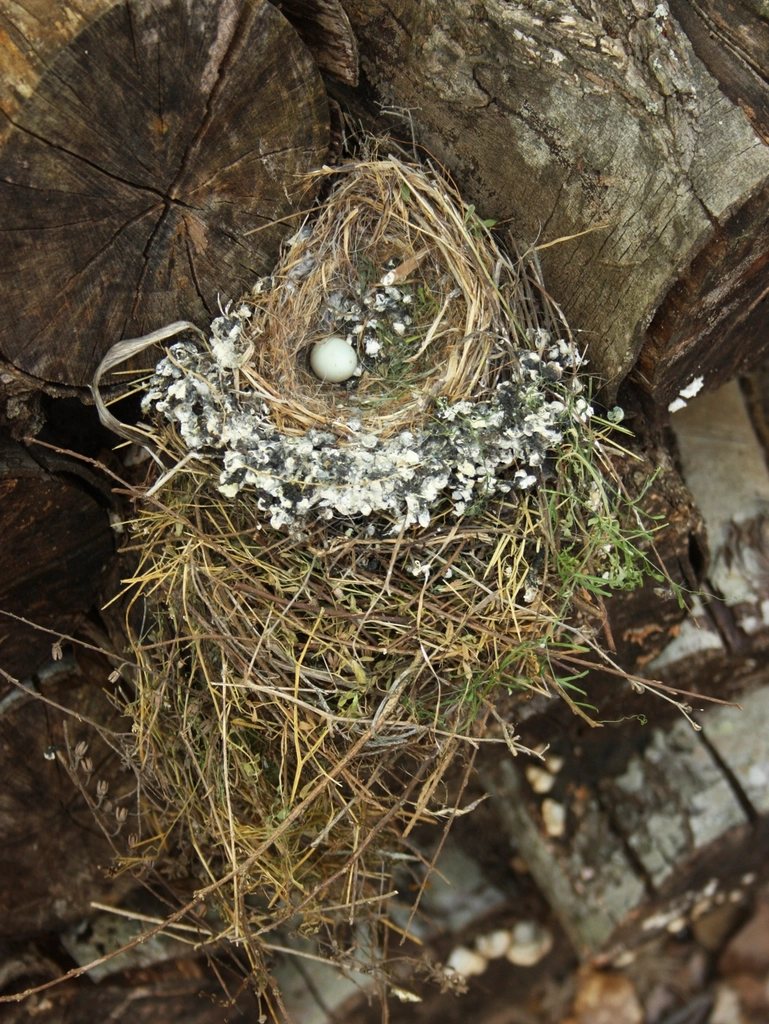
Spring is the season when the outdoors starts explaining itself. After months in which the woods seemed to be holding their breath, everything begins to happen at once, and it happens at a pace a child can follow. Frog spawn appears in a pond one week and has tails the next. A bean pushed into the soil by a four year old becomes a plant taller than the four year old by June. We think spring is the best season to begin a habit of regular outdoor time, because the feedback is so fast. This guide follows three of the most rewarding spring projects for children from two to twelve: tadpoles, nests and planting.
Frog spawn and the twelve week transformation
In much of northern Europe the common frog spawns between late February and early April, depending on how cold the winter has been, and in still, shallow water that warms quickly. Spawn is easy to recognise: clumps of clear jelly the size of a fist or larger, each containing hundreds of black dots. The best way to observe it is in place. We visit the same pond edge once or twice a week and let children look for the changes: the dots becoming commas, the commas becoming tadpoles that wriggle free and cling to the jelly, then feed on algae along the margins.
Tadpoles take roughly twelve to sixteen weeks to become froglets. Back legs come first, front legs later, and the tail is absorbed rather than dropped. Watching this over a whole spring teaches patience and a real sense of biological time. A small tray of pond water lifted for ten minutes and returned to the same pond is a fair compromise for the youngest children.
Two rules matter here. First, we never move spawn or tadpoles from one pond to another. Amphibian diseases spread that way, and invasive plants and animals travel with the water. Second, if we raise tadpoles in a tank at home or in a setting, they come from a single pond, go back to that same pond, and get a shallow ramp or stones to climb out on the day the front legs appear, because a froglet in deep water with no exit will drown. Most of us, though, find that the pond itself is the better classroom.
Nests: watching without touching
The main nesting season for garden and woodland birds runs from March into August, and the busiest weeks are April and May. Children notice the signs before they notice the nests: a robin singing from the same post every morning, a pair of blue tits flying repeatedly into a hole in a wall, a wood pigeon breaking twigs from a tree. Following a bird with our eyes to see where it goes is a game that suits any age.
The rule is simple and we explain the reasons rather than just the prohibition. We do not touch nests, eggs or chicks, and we do not linger close enough to keep the parents away, because chicks left uncovered chill fast and a nest visited often may be found by a crow or a cat. In many countries it is also against the law to disturb an active nest. Hedges and dense shrubs are not cut during these months for the same reason. If a child finds a chick on the ground, we look at it before acting. A fledgling with feathers, hopping about, is usually being fed by parents nearby and should be left alone or moved a few metres into cover. A naked, blind nestling has fallen and can be gently returned to the nest if it is visible and reachable, since parent birds do not reject young that have been handled.
A good spring project is collecting nesting material rather than nests: children gather moss, dry grass, sheep’s wool from fences and hair from a hairbrush, push it into the gaps of a wire suet cage or a mesh bag, hang it from a branch and watch who comes to take it. Nest boxes put up by early February are often used the same year.
Seeds, soil and the plants that reward beginners
Planting is where spring becomes physical. Children who dig, sow, water and wait are learning where food comes from in the most direct way available. The plants that work best for young gardeners are the fast, the large and the forgiving. Radishes germinate in days and can be pulled within four weeks. Peas and broad beans have seeds big enough for a two year old to handle and shoots strong enough to survive rough treatment. Sunflowers grow at a pace children can measure against themselves, and the tallest varieties pass three metres by late summer. Potatoes in a bag or a bucket give the satisfaction of a treasure hunt at harvest. Nasturtiums, marigolds and cornflowers bring the insects that make the garden interesting.
The science is easy to build in. Put a bean in a jar with a damp paper towel against the glass and children can watch the root emerge first, then the shoot, and see that the plant knows which way is up. Plant three pots of the same seed and put one in the dark, one on a windowsill and one outside, then compare. Sow a row of seeds and a row of nothing, and see what comes up in the empty row anyway.
Weather that changes by the hour
Spring weather is unreliable, and this is part of its value. We dress children in layers that come off and go back on, and we carry waterproofs even when the sky is clear. Ground in spring is often wet and cold, so a sit mat or a folded foam pad in every bag makes the difference between a comfortable snack and a shivering one. The sun is stronger than it feels: by late April the ultraviolet index in northern Europe is high enough to burn fair skin at midday, well before the air feels hot.
A spring routine worth repeating
The habit that turns spring from a collection of nice moments into real learning is repetition. One pond, one hedge, one patch of soil, visited weekly. Children begin to predict what they will see, and their predictions get better. A few things help:
- Keep a spring diary with a date and one drawing per visit, however rough.
- Give each child a magnifying glass and a small jar with a lid for ten minute looks.
- Learn five birdsongs as a family: robin, blackbird, wren, great tit and chiffchaff cover most spring mornings.
- Plant something on the first visit so that there is always something to check on.
- Photograph the same view from the same spot each week and lay the pictures out in June.
By the time the froglets are leaving the pond and the sunflowers are at knee height, children who have followed the season closely will have watched three complete stories from beginning to middle, and will be asking, unprompted, what happens next. That question is the whole point.