
Winter is the season that tests our convictions. It is easy to believe in outdoor childhood in May. It is harder on a January morning when the thermometer reads minus eight, the light is thin and the children are already complaining about their boots. Yet the families who stick with it through the cold months tell us the same thing: winter is where children learn that comfort is something you build rather than something the weather hands you. This guide covers the three things that make winter work with two to twelve year olds: snow as a material, ice as a laboratory, and clothing as a system.
Why the cold is worth it
Children lose heat faster than adults because they have more skin surface relative to their body mass, and the youngest ones cannot always tell us when they are cold. That is a reason for care, not for staying indoors. Regular time outside in winter keeps children moving at a time of year when activity levels drop, and it exposes them to daylight when days are short. In Scandinavian preschools, outdoor sessions continue well below freezing; staff simply shorten the time and add layers. There is no such thing as bad weather, only unsuitable clothing. What changes in winter is not whether we go out, but how long we stay and how we prepare.
Snow as a building material
Snow is one of the few materials children can shape at full body scale without tools. Its behaviour depends on temperature. Close to zero degrees, snow packs beautifully because a thin film of water on each crystal acts as a glue: this is snowball and snowman weather. Well below minus five, dry powder refuses to stick, and children discover this quickly and with real frustration. We treat the difference as the first experiment of the day: can we make a ball, and why not?
Beyond snowmen, the building projects that hold attention longest are the ones with a purpose. A snow wall to sit behind out of the wind. A snow kitchen with shelves scraped into a bank, where cooking games run for an hour. Snow bricks made in a plastic box, stacked into a low circular shelter that four children can crouch inside. A snow slide packed and smoothed on a gentle slope, then tested with a tray. We always check what is underneath a bank before children dig into it, and we never let anyone tunnel into a drift deep enough to collapse on them.
Ice as a laboratory
Ice offers experiments that need almost no equipment and that reveal genuinely surprising physics. The simplest is also the most reliable: fill a plastic bottle to the brim with water, screw the lid on tight and leave it out overnight in hard frost. In the morning the bottle will be bulging or split, because water expands by about nine percent when it freezes. Children who have seen this understand at once why pipes burst and why mountain rocks crack apart over winters.
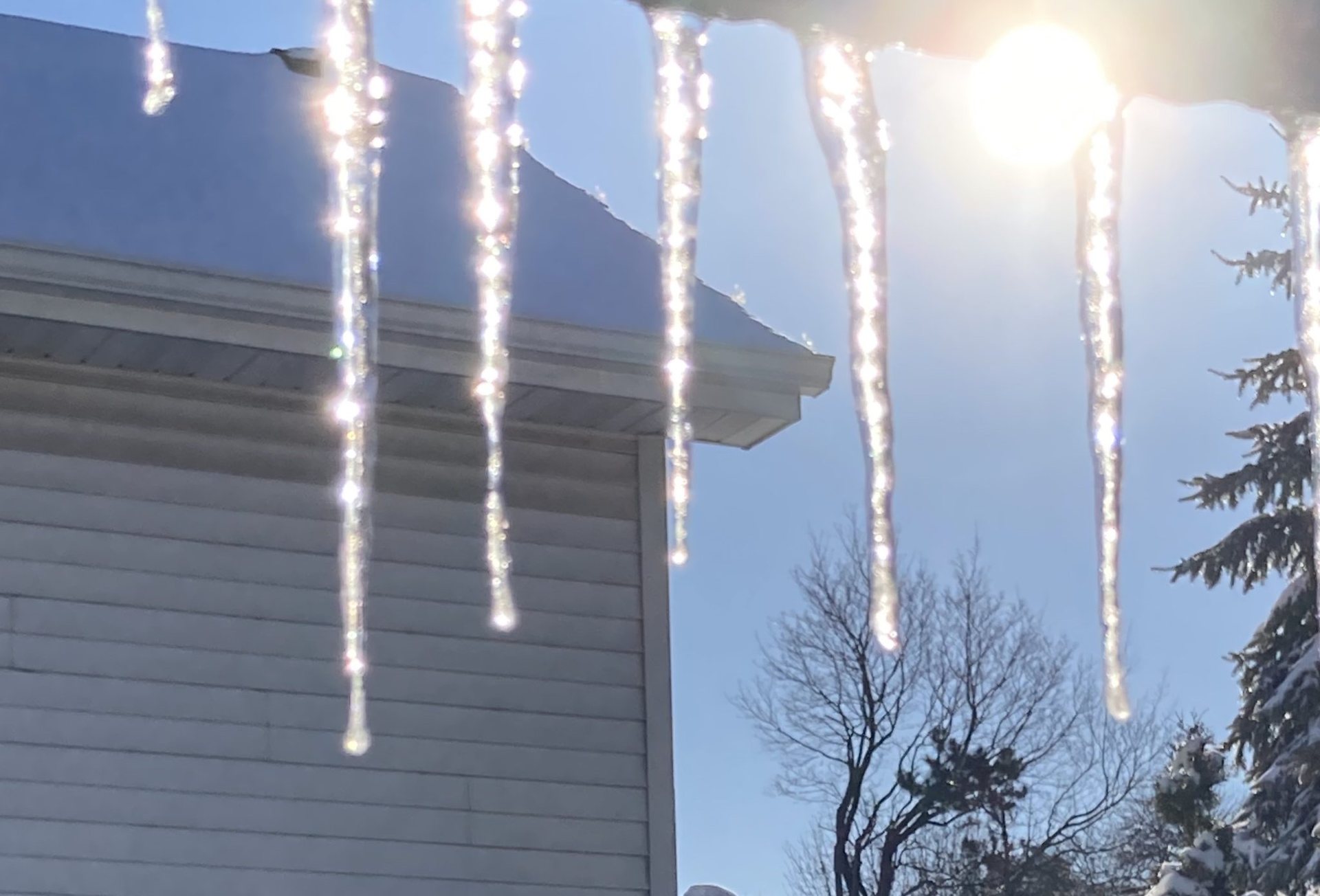
Ice ornaments are the classic craft. Fill shallow containers with water, add leaves, berries, pine needles or a few drops of food colouring, drape a loop of string over the edge and leave them to freeze. Hung from a branch the next day they catch the low sun. The variations teach more than the basic version: which freezes first, a wide shallow tray or a deep cup? Does salty water freeze at the same temperature? A pinch of salt on a lump of ice makes it melt visibly even in sub zero air, which is exactly why roads are gritted.
Frozen puddles and pond edges deserve a firm rule. Children may stamp on thin ice over a puddle they could stand in anyway. They may never walk out onto ice over water deeper than their knees, however solid it looks, because ice thickness varies across a single pond and we cannot see it. Ice on moving water is always suspect.
Layers, and why cotton lets us down
The clothing system that works is three layers, each with a job. The base layer, next to the skin, moves sweat away: wool or synthetic fabric, never cotton, because cotton soaks up moisture and holds it against the body, where it chills the child the moment they stop running. The middle layer traps warm air: fleece, wool or a light insulated jacket. The outer layer stops wind and water: a shell that is windproof, ideally waterproof, and roomy enough to fit over the other two without squashing them flat. Squashed insulation is no insulation.
Small bodies need extra attention at the edges. Hands go cold first, and mittens are warmer than gloves because the fingers share their heat. We carry spare mittens in every winter bag, because wet mittens are the single most common reason a session ends early. Heads lose a great deal of heat, so a hat that covers the ears is not optional. Boots should be a size that leaves room for thick socks and a pocket of air; tight boots make cold feet. A neck gaiter is easier and safer than a scarf that can catch on things.
Reading the signs of cold
Toddlers rarely say they are cold; they get quiet, clumsy or tearful. We check hands and the back of the neck every twenty minutes or so. Red cheeks are normal; pale, waxy or grey patches on cheeks, nose, ears or fingertips are the early signs of frostnip and mean we go in now and warm the skin slowly, never by rubbing. Persistent shivering that then stops, slurred speech or unusual drowsiness are warning signs of hypothermia and are a reason to end the session immediately and get the child warm and dry. In strong wind, exposed skin can freeze in well under half an hour once the wind chill drops towards minus thirty; on those days we stay near the door and keep sessions short.
The single most effective winter habit we know is movement. A child who is building, hauling sledges or stamping out a maze in the snow generates heat; a child standing still in a queue does not. We plan sessions so that the quiet activities come after a good run.
A winter session that works
- Check the forecast for wind as well as temperature, and set a time limit before leaving.
- Dress children in three layers with mittens, ear covering hat and roomy boots.
- Start with something that gets everyone moving: a sledge run, a snowball target, a chase game.
- Move on to building or ice experiments once the children are warm.
- Bring a flask of something hot and a full change of clothes for each child, and check hands regularly.
- Finish before the first child gets miserable, not after, so that winter stays associated with pleasure.
Winter asks more of us as adults: more preparation, more laundry, more spare mittens. What it gives back is children at ease in a season many adults hide from, who have felt for themselves that snow, ice and cold are not enemies but materials, questions and a great deal of fun.